

For Survivors
A Sanctuary for Remembering, Healing, and Becoming Whole.
Explore resources that honor your truth, soothe your nervous system, and guide you on your journey of healing and recovery.
A Gentle Warning Before You Begin
What you’re about to read may stir things inside you, memories you’ve tucked away, emotions you haven’t had language for, sensations your body has been carrying alone for years. This is not because you’re weak. It’s because incest trauma reaches into places most people never have to confront, and learning the truth about its impact can be overwhelming.
I remember the first time I dared to read an article about incest. I was alone in my room, trying to understand what had happened to me. It took all night to get through a single article. I cried so hard I could barely see the words. I didn’t make a safety plan, I didn’t have anyone safe to call, and in my desperation I reached out to someone who wasn’t safe. That choice left me vulnerable, unprotected, and retraumatized.
I don’t want that for you.
Please take a moment before you continue to make sure you are resourced and supported.
Incest stories touch raw human themes: innocence, betrayal, trust, identity, sexuality, family. Feeling activated, protective, or uncertain is normal.
If you feel anxious, shaky, numb, overwhelmed, dissociated, or like you’re “slipping away,” that is not a failure, it’s your nervous system signaling that this is a lot.
Before you go deeper:
- Have someone safe you can reach out to, even if it’s just to say, “Can you check in with me in an hour?”
- If you don’t have a safe person right now, that’s okay, you’re not alone. There are crisis lines, survivor hotlines, and text-based support services listed later on this page.
- Create an exit plan: If you start to feel too overwhelmed, pause. Close the tab. Drink water. Step outside. Your healing does not depend on reading everything at once.
- Remind yourself that pacing is part of healing. Your body has carried enough urgency. You’re allowed to take this slowly.
And above all, please don’t read this alone in a moment of despair or isolation. I learned the hard way that being unprepared can make the experience heavier than it needs to be. You deserve support, safety, and steadiness as you learn about what happened to you.
You survived enough. Let’s make sure your healing is done with care.
Learn How to Keep Yourself Safe While Healing
Father-daughter incest is not only the type of incest most frequently reported but also represents a paradigm of female sexual victimization. The relationship between father and daughter, adult male and female child, is one of the most unequal relationships imaginable. It is no accident that incest occurs most often precisely in the relationship where the female is most powerless. The actual sexual encounter may be brutal or tender, painful or pleasurable; but it is always, inevitably, destructive to the child. The father, in effect, forces the daughter to pay with her body for affection and care which should be freely given.
A Place Built for the Ones Who Survived the Unthinkable
You and I both know that surviving wasn’t the hard part, living afterward was. The body remembers what the mind tries to forget, and unresolved trauma has a way of weaving itself into everything: how you love, how you trust, how you show up in your own life. For years, I lived inside the remnants of my trauma without even realizing it. I thought I was the problem. I thought I was “too much,” “too sensitive,” “too broken,” or "unlovable." In reality, my nervous system was still carrying experiences that were never mine to hold.
This page exists because you deserve a space that finally makes sense. A space that doesn’t minimize, sugarcoat, or tell you to “just move on.” A space created by someone who knows what it’s like to claw their way out of a trauma coma and ask, “Who am I without this pain?”
Here, you’ll find guidance shaped by survivors, informed by research, and softened with compassion, because healing requires all three. And yes, we sprinkle in a little humor when the soul gets too heavy; trauma may have rearranged our insides, but it didn’t take our ability to laugh at the absurdity of what we survived.
Most importantly, this space was built with one truth in mind: your story deserves to be understood, your voice deserves to be heard, your pain deserves to be acknowledged, and your healing deserves to be honored.
Being able to feel safe with other people is probably the single most important aspect of mental health; safe connections are fundamental to meaningful and satisfying lives.
What You’ll Find Here
Before you dive into the Knowledge Hub, I want you to know what this page offers, and what it won’t do.
You’ll find:
- Straightforward explanations of what incest trauma really is and how it impacts your brain, body, relationships, and identity.
- Research translated into language you don’t need a PhD to decode.
- Real survivor insights, truths we wish someone had told us 10, 20, even 30 years ago.
- Tools that help you understand why your reactions make sense, even when they feel chaotic.
- A roadmap toward rebuilding the parts of yourself trauma tried to convince you were gone forever.
You will not find:
- Toxic positivity
- “Just forgive” advice
- Shame disguised as healing
- Anything that suggests what happened to you was your fault
Healing from incest trauma is not a quick fix; it's a long recalibration of the body, the brain, the beliefs you formed in childhood, and the meaning you give to your own existence. But you don’t have to do that alone.
The core issue in traumatization is that survivors have been unable to realize fully what has happened to them and how it affects their lives and who they are.
Healing after incest isn’t about “getting over it.”
It’s about coming home to yourself, mind, body, and soul.
Below, you’ll find survivor-centered guides, reflections, and research-based insights organized by healing themes.
You’ve carried enough alone.
It’s time to understand what happened, and how it shaped the way you see yourself, love, and trust.
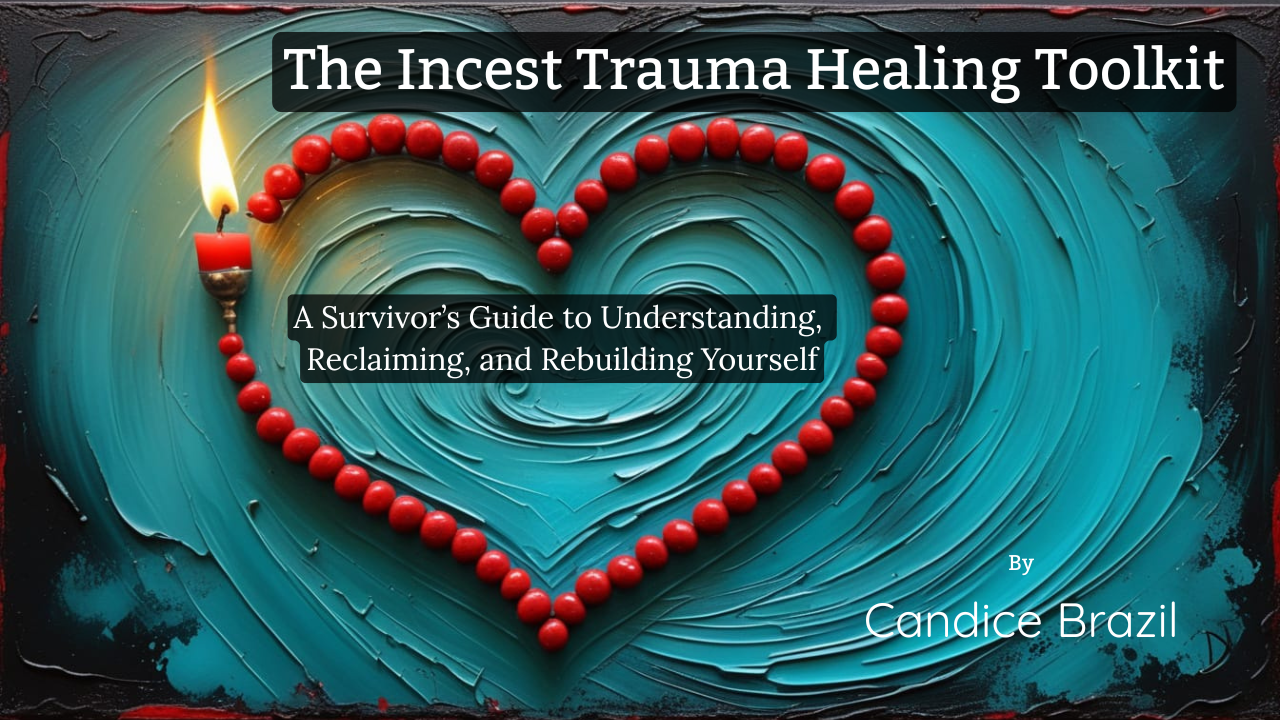
The Incest Trauma Healing Toolkit is a gentle, survivor-created guide that helps you make sense of your story, calm your nervous system, and begin rebuilding a relationship with yourself that feels safe again.
Whether you’re just realizing what you survived or years into your recovery, this toolkit gives you the language, framework, and guidance to start transforming pain into power.
New Here?
Begin with the foundations.
- Understanding The Trauma of Incest - A deeply compassionate, research-informed guide that explains what incest trauma is, why it leaves such profound emotional and physical scars, and how your brain and body adapted to survive the unimaginable.
- How Incest Trauma Shows Up in Your Adult Life - A research-informed guide explaining how childhood incest trauma affects adult identity, emotions, relationships, and daily functioning; covering shame, emotional flashbacks, numbing, brain fog, chronic symptoms, people-pleasing, and much more.
- Healing Your Relationship With Yourself - A guide for survivors of incest trauma on rebuilding relationship with self, covering body safety, reconnecting with sensations, healing shame, reclaiming your voice, and inner child/parts work.
- Relationships, Attachment & Love - A guide explaining how incest trauma shapes attachment, boundaries, partner choice, emotional availability, and relationship patterns, helping survivors build safe, healthy, trauma-informed love.
- Sexuality, Intimacy & Reclamation - A compassionate guide for survivors navigating sexuality, dissociation, triggers, reenactment, arousal confusion, and reclaiming sexual autonomy after incest.
- Family, Culture & Breaking the Cycle - A trauma-informed guide for incest survivors on understanding toxic family systems, navigating guilt and loyalty, going no contact, breaking generational cycles, and creating a chosen family rooted in safety and truth.
- Healing Tools, Skills & Daily Practices - A trauma-informed guide offering grounding tools, emotional regulation skills, dissociation awareness, nervous system practices, daily routines, and self-trust strategies for survivors of incest trauma.
- Your Long-Term Healing Journey - A guide for incest survivors on long-term healing, identity reconstruction, post-traumatic growth, meaning-making, community, advocacy, self-love, and building a future beyond trauma.
Trauma is not what happens to us, but what we hold inside in the absense of an empathetic witness.