
Understanding Incest
The purpose of this page is to combat the overwhelm by sharing hard-earned wisdom with clarity, so that incest survivor's may be empowered in their healing journey.
Here is where Holey House transforms the scattered, silenced truths about incest into organized, accessible, trauma-informed wisdom that survivors, partners, and therapists can actually use. My hope is to relieve the cognitive and emotional burden survivors carry by giving them a “Second Brain” they can borrow - mine.
Incest changes everything.
The brain. The body. The heart.
And the way we love.
"Trauma is perhaps the most avoided, ignored, belittled, denied, misunderstood, and untreated cause of human suffering."
Nowhere is Dr. Peter Levine's quote more true than in the realm of incest. This particular trauma exists inside a web of cultural denial so thick that even the professionals trained to help often hesitate to name it. The taboo surrounding incest silences survivors, distorts research, and buries the conversation under shame and secrecy. By confronting what society avoids, The Knowledge Hub seeks to dismantle that silence, transforming avoidance into awareness, ignorance into education, and suffering into understanding.
For too long, survivors have had to assemble the truth from fragments: a study here, a therapist there, whispers in hidden corners of the internet. The Knowledge Hub brings it all together, academic research, survivor insight, and trauma-informed language. Here we bring clarity where there once was confusion.
New Here? Begin with the foundations.
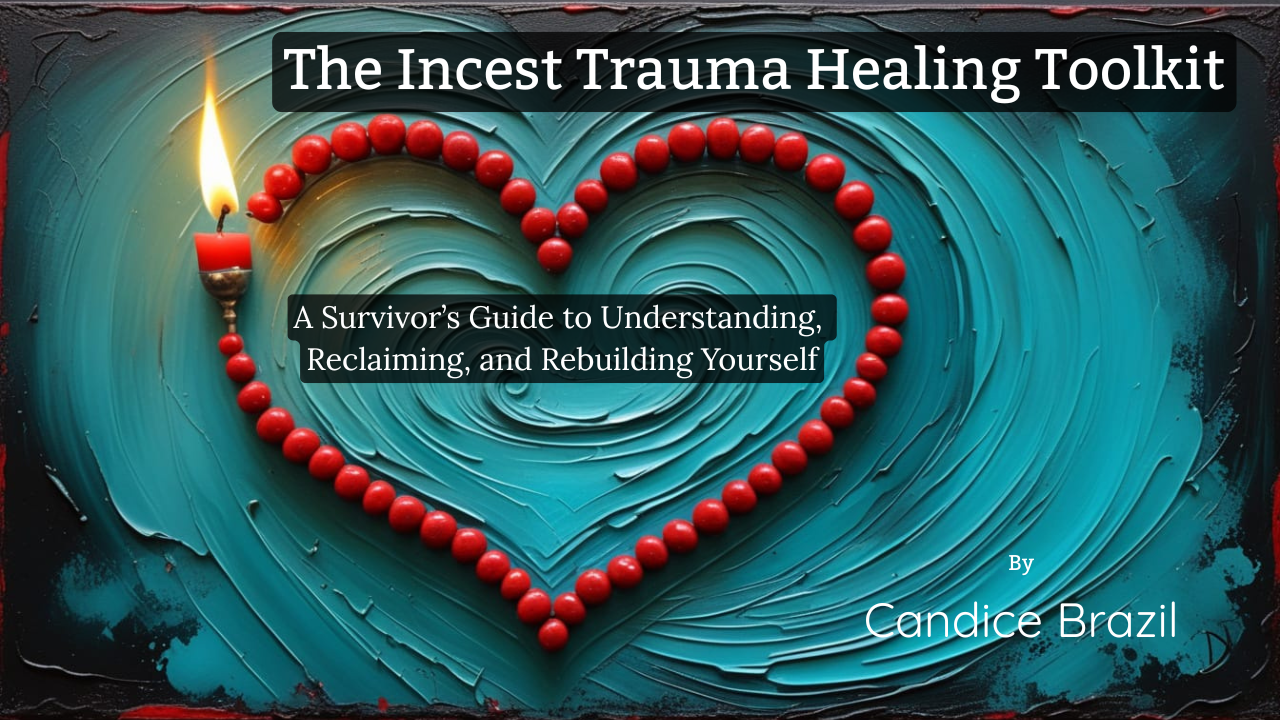
You’ve carried enough alone.
It’s time to understand what happened, and how it shaped the way you see yourself, love, and trust.
The Incest Trauma Healing Toolkit is a gentle, survivor-created guide that helps you make sense of your story, calm your nervous system, and begin rebuilding a relationship with yourself that feels safe again.
Whether you’re just realizing what you survived or years into your recovery, this toolkit gives you the language, framework, and guidance to start transforming pain into power.
Understanding Incest
I. The Trauma of Incest
Understanding the Hidden Architecture of Incest
How the systems of coercion, betrayal, secrecy and cultural denial enable incest abuse.
Core Concepts of Incest Abuse
Core Concepts of Incest Abuse
A foundational map of what incest is, how it functions, and why it creates such deep psychological wounds.
Incest Defined — A compassionate exploration of what legally, psychologically and relationally qualifies as incest, why definitions matter, and how clarity can free survivors from shame and confusion.
The History of Incest — Exploring the shifting landscape of laws, taboos and cultural narratives that have defined incest across time, so survivors can contextualize their experience and see that silence and denial have deep historical roots.
The Incest Taboo — Delving into why almost every culture prohibits sexual relations between kin, how taboos are constructed and weaponized, and how secrecy around incest can both protect and harm survivors.
Incest Avoidance — Exploring the evolutionary, psychological and social mechanisms that discourage sexual relationships between close relatives, and how grooming, trauma and secrecy can circumvent these protections.
What Everyone Needs to Know — Confronting misconceptions, institutional failures and cultural complicity so that survivors are believed, supported and empowered; and so that prevention becomes a collective responsibility.
Betrayal Trauma Theory — Explaining how trauma inflicted by trusted caregivers or institutions affects memory, perception and relationship dynamics; and why recognizing betrayal trauma is essential for survivors of incest and those who support them.
Forms of Sexual & Relational Abuse
Forms of Sexual & Relational Abuse
A comprehensive outline of the different relational, developmental, and coercive incest patterns.
Parental Incest — Uncovering the hidden epidemic of parent–child sexual abuse, shattering myths about who offends, and offering guidance for survivors, their partners and the professionals who walk with them toward healing.
Sibling Sexual Abuse — Understanding the dynamics, prevalence and hidden harm of sexual abuse between siblings, and providing guidance for survivors, allies and professionals to foster healing and prevention.
Familial Child Sexual Abuse — Exploring how sexual abuse within family systems operates, why betrayal intensifies trauma, and how survivors, allies and professionals can intervene and heal.
Child Sex Trafficking — Defining child sex trafficking, uncovering the hidden role of family facilitators, and offering guidance for survivors, allies and professionals working to end exploitation.
Multi-Perpetrator Sexual Abuse — Examining the dynamics, risks and long‑term effects of sexual abuse by multiple perpetrators, and offering guidance for survivors, supporters and therapists.
Emotional and Spiritual Incest — Recognizing the hidden forms of incest where parents or authority figures use children as emotional or spiritual partners, and understanding the lasting impacts on survivors and their relationships.
Covert vs Overt Child Sexual Abuse — Understanding the spectrum of sexual abuse—from non‑contact, boundary‑violating behaviors to explicit physical acts—and learning how survivors, allies and professionals can recognize and respond to both.
Groomed “Consensual” Child Sexual Abuse — Understanding how grooming creates the illusion of consent in sexual abuse, dismantling myths about voluntary relationships with abusers, and providing guidance for survivors, allies and therapists.
Accidental Incest — Exploring how unknown biological relationships can lead to accidental incest, the ethical dilemmas of sperm donation and adoption, and the psychological effects on those involved.
Genetic Sexual Attraction — Understanding the phenomenon of genetic sexual attraction (GSA), its origins in adoption and donor conception reunions, and providing guidance for those experiencing these feelings and the professionals who support them.
Mechanisms of Entrapment & Control
Mechanisms of Entrapment & Control
How abusers create dependency, collapse boundaries, and gradually normalize harm.
Grooming Tactics & Sequence — A compassionate deep‑dive into the step‑by‑step grooming process—why abusers use it, how it feels to be drawn in, and how survivors can reclaim their reality.
Graduated Boundary Violation — Exploring how abusers use incremental invasions of privacy, touch and trust to wear down resistance—one small step at a time.
Desensitization Process — An exploration of how repeated exposure to sexual content, touch, and boundary crossings gradually numbs the nervous system and blurs the line between safety and danger.
Boundary Collapse — How repeated intrusions and betrayal teach survivors to forsake their own needs, dissolve personal edges, and fuse with the abuser’s will.
Dependency Engineering — How abusers craft emotional, financial and relational dependence to ensure compliance and impede escape.
Progressive Entrapment — How abusers systematically reduce escape routes—emotionally, physically and socially—until leaving feels impossible.
Secrecy Systems & Isolation — How abusers weave secrecy, shame and isolation to conceal abuse and keep victims alone in their suffering.
Threat + Reward Cycles — Examining how abusers mix intimidation and affection to create trauma bonds and keep survivors hooked despite harm.
Manipulative Attachment Formation — Understanding forced bonding that blurs the lines between safety, danger and affection, making survivors feel loyal to those who harm them.
“Good Victim” Conditioning — How abusers reward obedience and punish resistance, turning survival strategies into self‑erasing behaviours.
Gaslighting — How abusers erode your confidence in your memories, perceptions and sanity—and how to reclaim your truth.
Coercive Control (Incremental Intrusions) — Understanding non‑violent patterns of power that slowly erode autonomy, liberty and identity in abusive relationships.
Family Systems & Collusion
Family Systems & Collusion
The relational environment that allows incest to continue, remain hidden, and survive confrontation.
Enmeshment — Understanding how blurred boundaries and emotional entanglement undermine individuality, autonomy and healthy connection – and how survivors can reclaim their sense of self.
Parentification — When children are forced into adult roles, they lose their childhood and develop patterns of hyper‑responsibility. Understanding parentification helps survivors reclaim their youth and heal from misplaced caregiving.
Triangulation & Scapegoating — Understanding how parents recruit children into adult conflicts and use scapegoating to deflect responsibility – and how survivors can untangle these harmful dynamics.
Denial & Minimizing — Exploring the mechanisms of denial and minimization in families affected by incest and abuse, and how acknowledging the truth is a crucial step toward healing.
Implicit Condoning by Non-Offending Parent — Understanding why some caregivers seem to ignore or excuse incest and what it really means for survivors and families.
Covert vs Overt Abuse — Unmasking the subtle tactics that keep families locked in cycles of incest, emotional manipulation and denial.
Collusive Family Roles — Understanding dysfunctional family roles like the Enabler, Hero, Scapegoat, Lost Child and Mascot helps survivors decode the collusion that sustains incest and emotional abuse.
Context of Trauma & Development
Context of Trauma & Development
How timing and developmental stage shape the depth of incest trauma.
Patriarchal, Cultural & Systemic Influences — Cultural norms that reinforce silence and control.
Intergenerational Trauma & Silence — How trauma patterns repeat across generations.
Age of First Trauma — Why earlier abuse causes deeper emotional and neurological impact.
Sensitive Windows of Attachment — How early attachment stages intensify trauma imprint.
Emotional Regulation System Development — Trauma’s effect on building emotional control.
Brain Development & Trauma Imprinting — How chronic fear shapes neural growth.
Trauma Before Language (Preverbal Encoding) — How early trauma becomes body-encoded.
Implicit vs Explicit Memory — Why survivors “know” without remembering.
Societal & Cultural Complicity
Societal & Cultural Complicity
The institutions, beliefs, and structures that allow incest to thrive.
Myths About Incest — False narratives that silence survivors and protect abusers.
Cultural Denial & Minimization — How society refuses to see familial sexual violence.
Legal Invisibility & Barriers to Justice — Why most incest cases never reach the legal system.
Child Protective Services: Victim Removal — When CPS punishes the child instead of the offender.
Silence of Institutions — How religion, medicine, and schools ignore or enable abuse.
Signs of Incest Abuse — Behaviors and patterns seen in victims, perpetrators, and families.
Morality, Empathy & Resistance — The institutions, beliefs, structures, and systems that enable incest through silence and inaction
II. The Survival
The Protection Patterns of Survival
The adaptive strategies and defense mechanisms that protected the self during ongoing danger.
Trauma Responses (The Body's Immediate Reflexes)
Trauma Responses
The nervous system’s automatic reactions to overwhelming threat and helplessness.
Triggers — Sudden emotional or physiological reactions to cues associated with past trauma.
Fawn — Appeasing, placating, or pleasing to prevent harm or maintain safety.
Freeze — Immobilization, numbness, or shutdown as a last-ditch survival response.
Flight — Escaping through avoidance, distraction, or hyperactivity.
Fight — Defensive anger, tension, or conflict used to regain control or safety.
Submission Reflex — Involuntary collapse into obedience or passivity under threat.
Dissociation & Fragmentation (The Mind’s Immediate Defense)
Dissociation & Fragmentation
The mind’s way of separating overwhelming experiences to preserve functioning.
Structural Dissociation — Parts of self splitting into survivor, protector, and wounded states.
Depersonalization & Derealization — Feeling unreal, outside the body, or disconnected from surroundings.
Amnesia, Memory & Time Loss — Gaps in recall caused by defensive memory compartmentalization.
Switching & Emotional Compartmentalization — Rapid shifts between emotional states or “parts.”
Functional Dissociation — Automatic numbing or detachment used to endure stress in adulthood.
Psychological Defense Mechanisms (Learned Strategies)
Psychological Defense Mechanisms
Patterns that protected the child from danger but become maladaptive in adulthood.
People-Pleasing — Seeking harmony or approval to prevent conflict or punishment.
Self-Abandonment — Neglecting personal needs to maintain relational safety.
Hypervigilance — Constant scanning for threat to stay ahead of danger.
Emotional Numbing — Suppressing emotional intensity to survive chronic overwhelm.
Avoidance — Steering away from triggers, intimacy, or vulnerability to stay safe.
Fantasy & Idealization — Escaping into imagined worlds or idealized relationships.
Overfunctioning & Caretaking — Taking responsibility for others to prevent chaos or harm.
Denial & Dissociation as Default — Turning off awareness to survive the unendurable.
Projection — Attributing internal fear or shame onto others for self-protection.
Hyper-Independence & Co-Dependence — Swinging between isolation and entanglement in relationships.
Internal Working Models, Schemas & Identity
Internal Working Models, Schemas & Identity
The learned beliefs and self-concepts formed in the environment of trauma.
Trauma Logic / Trauma Narratives — Internal stories created to make sense of betrayal and danger.
Defectiveness – Shame Schema — Deep beliefs of being bad, broken, or fundamentally wrong.
Emotional Deprivation Schema — Expecting that needs will not be understood or met.
Mistrust – Abuse Schema — Assuming others will harm, manipulate, or betray.
Subjugation – Self-Sacrifice Schema — Believing one must comply or submit to stay safe.
Dependence – Incompetence Schema — Feeling incapable or helpless without others.
Unworthiness – Unlovable Schema — Internalizing the belief that love must be earned or appeased.
Emotional Inhibition — Restricting expression to avoid punishment or rejection.
The False Self (Adaptive Identity Structure)
The False Self
The persona developed to survive a dangerous, invalidating, or chaotic environment.
Masking & Chameleon Behavior — Shifting identity to match others’ expectations for safety.
Hyper-Adaptability — Rapidly reshaping behavior or personality to avoid conflict.
Dissociative Identity Structures — Fragmented internal selves formed to hold overwhelming pain.
Role-Based Self-Worth — Basing identity on roles like “caretaker,” “achiever,” or “peacemaker.”
III. The Impact
The Echoes of Incest Trauma Through the Mind, Body, and Soul
The chronic physiological, emotional, relational, and functional consequences of unresolved incest trauma.
Chronic Physiological & Cognitive Sequelae
Chronic Physiological & Cognitive Sequelae
Long-term changes in brain development, stress systems, and somatic functioning caused by repeated trauma.
Brain Development & Trauma (Amygdala, Hippocampus, PFC) — How chronic threat reshapes neural structures responsible for memory, fear, and reasoning.
Default Mode Network Disruption — Why survivors struggle with self-reflection, identity coherence, and internal calm.
Memory Fragmentation & Chronic Dissociation — Ongoing difficulties integrating memory, emotion, and bodily states.
HPA Axis Dysfunction — A stress system stuck in overdrive or collapse due to prolonged danger.
Chronic Hypervigilance & Shutdown Cycles — Oscillating between high alert and total exhaustion.
Vagal Shutdown — Dissociation triggered by overwhelming cues or relational threat.
Somatic Memory & Body Flashbacks — Nonverbal sensory memories stored in the body.
Chronic Pain & Somatic Illness — Fibromyalgia, migraines, GI issues, and conditions tied to unresolved trauma.
Psychological & Emotional Effects
Psychological & Emotional Effects
The enduring emotional and cognitive consequences of early betrayal, coercion, and developmental disruption.
Fragmented Identity & Loss of Self — A disrupted sense of “who I am” caused by chronic dissociation.
Emotional Repression — Habitual suppression of emotions to maintain safety.
Emotional Dysregulation — Difficulty managing intensity, fear, shame, or overwhelm.
Learned Helplessness — Feeling powerless to change outcomes due to prolonged entrapment.
Cognitive Distortions — Trauma-shaped beliefs that skew perception and interpretation.
Maladaptive Schema — Deep-rooted beliefs formed under chronic threat.
Internalized Abuser Voice — A harsh inner critic modeled after the abuser’s control.
Lower Self-Awareness — Difficulty identifying feelings, needs, or internal states.
Anxiety & Panic Attacks — Fear responses activated by subtle or invisible cues.
Emotional Flashbacks — Sudden overwhelming emotional states without clear triggers.
Rage, Panic & Fear — Heightened reactivity tied to unresolved trauma imprints.
Triggers & Flooding — Overwhelming internal activation during perceived danger.
Executive Dysfunction — Trouble with planning, focus, and organization.
Self-Distrust — Inability to trust memories, perception, or intuition.
Lower Social-Emotional Skills — Developmental delays caused by chronic childhood threat.
Relational & Attachment Injury
Relational & Attachment Injury
Deep disruptions in trust, intimacy, and interpersonal safety caused by attachment betrayal.
Disorganized Attachment — Conflicted patterns of seeking closeness and fearing it.
Anxious-Preoccupied & Avoidant Dynamics — Attachment strategies formed underfear and unpredictability.
Trauma Bonding — Emotional attachment reinforced through fear, relief, and intermittent kindness.
Fear of Intimacy & Closeness — Feeling unsafe in emotional or physical vulnerability.
Intimacy Ambivalence — Wanting closeness while fearing engulfment or abandonment.
Conflict Avoidance — Avoiding disagreement due to fear of harm or rejection.
Emotional Unavailability Cycles — Alternating between connection and shutdown.
Codependency vs Hyper-Independence — Swinging between overattachment and withdrawal.
Trust & Betrayal Trauma — Fear of trusting others due to past betrayal.
Self-Silencing & Overcommunication — Hiding needs or overexplaining to avoid harm.
Immature Social-Emotional Skills — Gaps caused by developmental trauma during key growth periods.
Reenactment & Relationship Patterns
Reenactment & Relationship Patterns
Repetitive emotional, relational, and sexual patterns that mirror the original trauma environment.
Repeating the Familiar Pain — Unconsciously choosing what feels recognizable, not what feels safe.
Repeating Power Imbalances — Gravitation toward unequal dynamics due to learned helplessness.
Trauma Bonding & Intermittent Reinforcement — Attachment driven by unpredictability and intensity.
Submission & Dominance Cycles — Roles learned in childhood reenacted in adult relationships.
Attraction to Emotionally Unavailable Partners — Seeking partners who match early attachment wounds.
Rejection Sensitivity & Self-Sabotage — Overreacting to perceived rejection or sabotaging to regain control.
Sexual Pain as Emotional Reenactment — Experiencing discomfort or pain tied to trauma echoes.
Recreating Childhood Dynamics in Love — Adult relationships mirroring family-of-origin patterns.
Sexual & Romantic Consequences
Sexual & Romantic Consequences
How trauma shapes desire, arousal, and intimacy in adulthood.
Sexual Shutdown & Aversion — Loss of interest or fear around sexual activity.
Compulsive Sexual Behavior — Using sex to regulate emotions or reclaim control.
Reenactment Scripting — Sexual behaviors that mimic trauma patterns.
Hypersexuality — High sexual drive as a dissociative or regulatory strategy.
Sexual Fawning & Hyper-Compliance — Agreeing to sexual activity to avoid conflict or please others.
Body Disconnection & Dissociation During Intimacy — Mentally “checking out” during touch or sex.
Performance-Based Sex — Prioritizing a partner’s experience over personal needs or safety.
Confusion Between Love, Pain & Attention — Blurred lines between affection and harm.
Enmeshment & Co-Dependence — Losing identity within romantic relationships.
Behavioral & Functional Impacts
Behavioral & Functional Impacts
Life patterns and coping behaviors shaped by chronic survival mode.
Perfectionism & People-Pleasing — Achieving or pleasing to maintain safety or worth.
Addiction & Self-Medication — Substances or behaviors used to soothe dysregulation.
Workaholism — Overworking to avoid internal distress.
Eating Disorders — Food used to manage emotional overwhelm or reclaim control.
Self-Harm & Suicidality — Coping with unbearable internal pain.
Financial or Relational Self-Sabotage — Undermining stability due to internalized fear or unworthiness.
Spiritual & Existential Impact
Spiritual & Existential Impact
The loss of faith, meaning, or connection that follows deep betrayal.
Loss of Trust in Goodness — Difficulty believing in safety, kindness, or benevolence.
Loss of Trust in Self — Feeling disconnected from intuition and inner truth.
Guilt Toward Faith or God — Spiritual conflict, shame, or perceived moral contamination.
Existential Grief & Meaning Loss — Feeling untethered or questioning life’s purpose.
Moral Injury & Spiritual Bypassing — Internal conflict caused by misused spiritual teachings.
Reconnection with Self/Spirit — Restoring inner alignment and wholeness.
IV. The Healing
Discovering Self and the Journey of Healing After Incest
The somatic, psychological, relational, and identity-based processes that create transformation and repair.
Trauma Literacy & Reframing
Trauma Literacy & Reframing
Building understanding that shifts shame into clarity and unlocks self-compassion.
Trauma vs Pathology — Understanding that symptoms are survival strategies, not defects.
Language & Psychoeducation — Words that contextualize trauma and restore meaning.
Biology of Safety & Regulation — How the nervous system finds stability after chronic threat.
Shame to Self-Compassion — Replacing self-blame with trauma-informed understanding.
Nervous System Education — Learning how stress responses function and how to soothe them.
Reframes & Normalization — Correcting distorted beliefs shaped by trauma.
Integration & Transformation — Bringing fragmented parts and memories into coherence.
Healing Stages, Tools & Resources — Mapping the phases and methods of recovery.
Somatic & Nervous System Healing
Somatic & Nervous System Healing
Body-centered approaches to release stored trauma and expand capacity for safety.
Grounding & Orienting — Techniques that bring the body back into the present moment.
Vagal Toning — Practices that strengthen parasympathetic calm and resilience.
Pendulation & Titration — Gradual exposure to emotion or sensation without overwhelm.
Movement Therapy — Using dance, yoga, or motion to unlock frozen trauma states.
Somatic Experiencing — Tracking bodily sensations to resolve trauma energy.
Trauma Release Through the Body — Somatic methods for discharging survival responses.
Breathwork — Controlled breath to reset stress responses.
Neurofeedback — Brain training to restore regulation and integration.
Therapeutic Modalities (Internal Work)
Therapeutic Modalities
Evidence-informed approaches for processing trauma, reorganizing identity, and restoring safety.
IFS (Internal Family Systems) — Working with protector, manager, and wounded parts of self.
EMDR (Eye Movement Desensitization and Reprocessing) — Eye movement therapy for reprocessing traumatic memories.
SE (Somatic Experiencing) — Body-based trauma resolution through sensation tracking.
TF-CBT (Trauma-Focused Cognitive Behavioral Therapy) — Cognitive and behavioral methods for emotion regulation and resilience.
DBT (Dialectical Behaviora Therapy) - Practical skills for regulating intense emotions, tolerating distress without self-destruction, improving relationships, and staying grounded in the present
Ego-State Therapy — Strengthening internal parts and resolving inner conflict.
Trauma-Informed Sex Therapy — Addressing intimacy, triggers, and embodied consent.
Group & Relational Therapy — Healing through safe connection and co-regulation.
Reparenting & Identity Reconstruction
Reparenting & Identity Reconstruction
Restoring the sense of self that trauma fragmented, suppressed, or distorted.
Inner Child Repair — Reconnecting with wounded inner children to restore unmet needs.
Self-Concept Healing — Rebuilding identity beyond trauma roles and false selves.
Self-Trust Development — Relearning to trust intuition, perception, and inner voice.
Shame Repair & Resilience — Healing internalized negativity and restoring worthiness.
Narrative Rewriting — Reframing life stories through a compassionate lens.
Post-Traumatic Identity Formation — Developing a sense of self rooted in agency and truth.
Reparative Emotional Experience — Internalizing new emotional memories that contradict trauma.
Relational & Sexual Healing
Relational & Sexual Healing
Developing safe, attuned connection and reclaiming sexuality from trauma’s imprint.
Identifying Healthy vs Unhealthy Relationships — Learning the markers of safety and danger.
Safe, Healthy Relationship Skills — Building communication, vulnerability, and mutual respect.
Trauma-Informed Communication — Speaking and listening in ways that reduce triggers and shame.
Boundary Tools & Scripts — Practical language survivors can use with partners.
Voicing Needs & Accepting Love — Learning to receive support without fear or guilt.
Emotional Safety & Pacing — Establishing speed and boundaries that protect the survivor.
Intimacy After Incest — Navigating closeness after sexual trauma.
Sexual Healing — Reclaiming pleasure, choice, and embodied sexuality.
Consent & Embodied Boundaries — Relearning how to sense and express bodily “yes” and “no.”
Co-Regulation in Partnership — Using connection to soothe dysregulation safely.
Witness & Validation — The healing power of being seen and believed.
Rupture & Repair Strategies — Addressing conflict or misattunement without reenacting trauma.
Life Reconstruction & Meaning
Life Reconstruction & Meaning
Building a life rooted in autonomy, authenticity, and purpose beyond trauma.
Post-Traumatic Growth — Transformation that emerges after deep healing and integration.
Building Safe Routines — Creating structure that supports nervous system stability.
Reclaiming Agency — Taking back choice, voice, and autonomy.
Implementing Healthy Practices — Daily habits that sustain healing and balance.
Financial & Career Stability — Rebuilding independence and long-term security.
Grief Work — Honoring the pain of what was missed or stolen.
Meaning Making & Purpose — Creating new narratives rooted in strength and hope.
Ritual & Creativity — Using art, nature, and symbolism for emotional integration.
Spiritual Reconnection — Restoring faith, connection, and inner grounding.
Expressive Writing & Reflection — Using journaling for emotional processing and clarity.
Psycho-Spiritual Integration — Aligning emotional healing with spiritual transformation.
V. Allies & Resources
The Networks of Support
The role of partners, professionals, and systems in supporting survivors and preventing further harm.
Partner & Relational Education
Partner & Relational Education
Guidance that helps partners show up with steadiness, compassion, and trauma-informed understanding.
Partner Guide Materials & Resources — Foundational education to help partners understand incest trauma.
Limits of a Partner’s Role — Clarifying what partners can support without becoming the therapist.
Partner Burnout & Emotional Toll — Recognizing the compassion fatigue and vicarious trauma partners may experience.
Partner Self-Care & Support — Strategies for maintaining emotional balance while offering support.
Partner’s Own Therapy — The importance of personal healing to avoid reenacting harmful dynamics.
Relational Safety & Trust — Creating consistency and predictability that supports survivor healing.
Clinical & Professional Competence
Clinical & Professional Competence
Skills, ethics, and frameworks therapists need to safely and effectively support incest survivors.
Therapist Literacy & Resources — Essential knowledge for clinicians working with incest trauma.
Misdiagnosis Prevention — Identifying mistakes that confuse trauma with personality or psychosis.
Ethical Frameworks — Trauma-informed ethical principles for safe therapy.
Contraindications to Therapy — When certain interventions or methods may be unsafe.
Clinical Considerations & Best Practices — Guidelines for pacing, safety, and attunement.
Incest-Specific Frame — How attachment betrayal changes the clinical approach.
Countertransference — Recognizing therapist emotional reactions that may impact treatment.
Preventing Role Confusion & Rescue Dynamics — Avoiding over-identification, savior responses, and blurred boundaries.
Recognizing Vicarious Trauma & Secondary Dissociation — How clinicians can protect their own nervous systems.
Systemic & Advocacy Change
Systemic & Advocacy Change
The larger cultural and institutional shifts needed to prevent incest and support survivors.
Legal & Justice System Reform — Addressing flaws that prevent survivors from accessing justice.
Mandated Reporting Risks & Consequences — Understanding how reporting systems often retraumatize victims.
Cultural Narrative Change — Rewriting societal beliefs that normalize or minimize incest.
Advocacy & Policy Work — Efforts aimed at strengthening protections for survivors.
Community Education & Prevention — Teaching families, schools, and institutions how to identify and intervene.
Institutional Accountability — Holding religious, medical, educational, and social institutions responsible for silence.
Therapeutic Toolkits & Resources
Therapeutic Toolkits & Resources
Practical tools, guidelines, and supports for safe, effective, and trauma-informed healing.
Therapeutic Tools — Worksheets, exercises, and structured practices for healing.
Psychoeducation — How clinicians should deliver trauma education safely.
Dissociation Guidelines — Clinical strategies for supporting highly dissociative survivors.
Ethical Somatic Practice — When and how to incorporate touch and body-based work appropriately.
Referral Networks — When to involve specialists in dissociation, sexual trauma, or complex PTSD.
Researchers - Key experts whose work shaped modern incest and trauma research.
Literature - Foundational books, studies, and survivor-centered materials.